

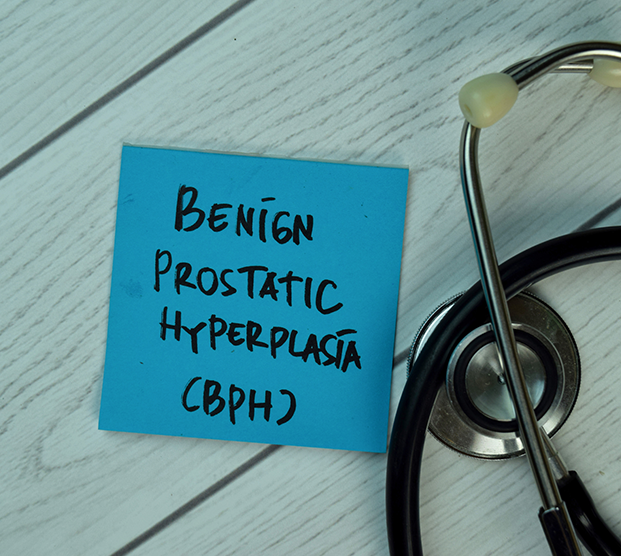
Symptoms of BPH include:
- Difficulty starting urination
- Dribbling at the end of urination
- Inability to completely empty the bladder
- Frequent or urgent need to urinate
- Weak urine stream or a stream that stops and starts
- Increased frequency of urination at night (nocturia)
- Urinary tract infection (UTI)
- Inability to urinate
- Blood in the urine
Left untreated, BPH can lead to urinary retention, bladder stones, bladder damage, and kidney damage.
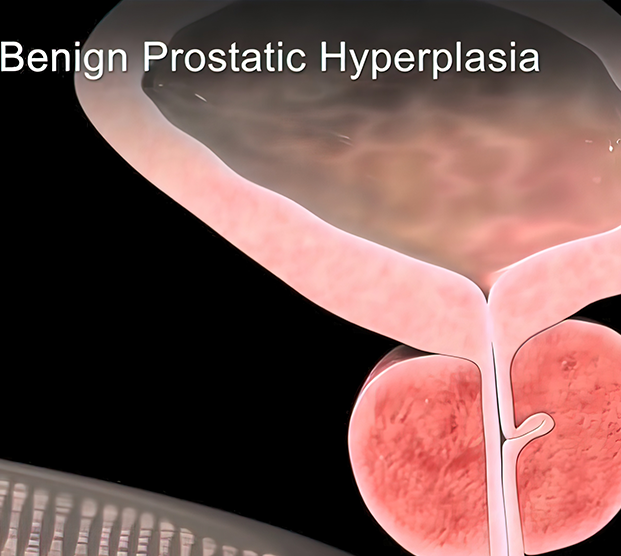
Potential causes of BPH include continued prostate growth throughout life that causes urinary symptoms or blocks urine flow. The exact cause of prostate growth is unclear, but may be related to changes in the balance of sex hormones as men age.
Risk factors of BPH include aging, family history, diabetes, heart disease, and obesity.
HoLEP
Holmium laser enucleation of the prostate (HoLEP) is an incisionless and minimally invasive procedure that can be utilized to treat any size prostate. During this endoscopic procedure, obstructing prostate tissue is removed off the internal capsule of the prostate to maximize the relief of urinary obstruction. The tissue is examined in the laboratory to evaluate for malignancy. Currently, laser enucleation is recommended by the American Urological Association (AUA) as the only incisionless minimally invasive surgical option for large or huge prostates in patients with symptomatic BPH. HoLEP is the most common laser enucleation procedure performed worldwide and has been shown, in many studies, to be the size-independent procedure of choice for the management of BPH.
Prostate Artery Embolization (PAE)
This minimally invasive treatment addresses urinary tract symptoms caused by benign prostatic hyperplasia. During the procedure, an interventional radiologist inserts a small catheter into the artery in the wrist or groin and guides it into the vessels that supply blood to the prostate. The blood vessels feeding into the prostate are then mapped using an arteriogram. The radiologist will inject microspheres through the catheter into the blood vessels to reduce its blood supply. The catheter will then be moved to treat the other side of the prostate, and the radiologist will repeat the previous steps.

PVP
Laser photoselective vaporization of the prostate (PVP) is done using a cystoscope that is inserted into the penis. The surgeon inserts a laser through the cystoscope to destroy excess tissue blocking the flow of urine through the prostate. This procedure doesn’t cut or scrape tissue and results in less blood loss than traditional prostate surgery.
Rezūm
Rezūm therapy is a minimally invasive approach that uses water vapor to damage excessive prostate tissue. Treatment damages cell structures and helps reduce the size of the prostate. Treatment doesn’t require general anesthesia and may be performed with a numbing gel or local anesthetic.
TURP
UroLift
With this approach, the surgeon will place small, permanent implants into the prostate to lift and hold the enlarged tissue away from the urethra. This minimally invasive procedure helps relieve pressure on the urethra and supports normal urination. UroLift doesn’t require any heating, cutting, or removal of prostate tissue. UroLift is often an office-based procedure and can be performed using a local anesthetic.
Robot Simple Prostatectomy
For men with very enlarged prostates (greater than 100g), many other options for alleviating symptoms are not effective. Robotic surgery can be utilized to remove the central portion of the very enlarged prostate rapidly to provide excellent urinary symptom relief. This can be done as an outpatient.