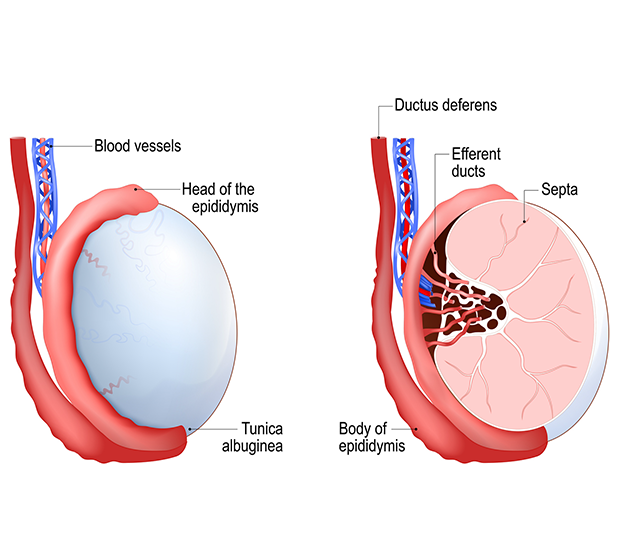
When the veins within the loose bag of skin that holds the testicles (scrotum) become enlarged, the patient has a varicocele (VAR-ih-koe-seel). These veins transport oxygen-depleted blood from the testicles to the heart. A varicocele occurs when blood pools in the veins rather than moving out of the scrotum.
Varicoceles typically form during puberty and grow over time. Some varicoceles may cause discomfort or pain, but most patients don’t experience any symptoms or complications.
A varicocele may inhibit development of the testicle, and lead to low sperm production or other problems that may contribute to infertility. In these cases, surgery may be recommended to treat the varicocele and address complications.
Symptoms of Varicocele
A varicocele typically forms on the left side of the scrotum and often doesn’t cause any signs or symptoms. However, some patients may experience the following signs and symptoms:
A dull, aching pain or discomfort when standing or late in the day
A mass in the scrotum that looks like a “bag of worms” located above the testicle
A visibly smaller testicles
Infertility
Causes of Varicocele
Oxygen-rich blood flows to the testicles from two testicular arteries. There are also two testicular veins that transport oxygen-depleted blood back toward the heart. Within each side of the scrotum is a network of small veins (pampiniform plexus) that transport the oxygen-depleted blood from the testicle to the main testicular vein.
The direct cause of a varicocele is unknown, but one contributing factor may be malfunctioning valves inside the veins responsible for keeping blood moving in the right direction. In addition, because the left testicular vein follows a slightly different path than the right vein, problems with blood flow are more likely on the left.
When the oxygen-depleted blood flows back into the network of veins, they widen (dilate) and create the varicocele.
Diagnosing a Varicocele
To diagnose a varicocele, the physician will perform a visual inspection of the scrotum and physically touch the area. The patient will likely be examined while lying down and standing up.
While the patient is standing, the physician may ask them to take a deep breath, hold it, and bear down, as if they’re having a bowel movement. This is called the Valsalva maneuver, a technique that makes it easier to examine a varicocele.
The patient may also need to undergo an ultrasound exam to create images that will be used to:
Diagnose or characterize the varicocele
Identify a lesion or other factor obstructing blood flow
Rule out other conditions as possible causes of signs or symptoms
Treatment Options for a Varicocele
Oftentimes, a varicocele doesn’t need to be treated. However, patients experiencing infertility may need surgery to correct the varicocele as part of their fertility treatment plan.
For teenagers or young adults, the physician may suggest annual checkups to monitor any changes. Surgery might be recommended under the following circumstances:
A testicle showing signs of delayed development
Low sperm count or other sperm irregularities (typically in adults)